Climate Resilience Starts with Parks
We believe that public lands are critical and sustainable nature-based solutions to the increasing challenges of climate change. Green spaces—such as parks, coastal areas, shorelines, grasslands, and forests—are essential for helping communities adapt and become more resilient. Support Our Work


Every community in this country is experiencing the effects of a changing climate, but no two have the same needs or the same capacity to address them. Our focus is on identifying nature-based solutions that fit with each community’s needs, desires, cultures, and priorities. Whether helping a city increase its tree canopy to combat extreme heat, securing funding to mitigate a town’s risk of catastrophic wildfire, or partnering with neighbors on a climate-smart community schoolyard that captures stormwater to prevent flooding, we bring our climate expertise to every TPL project to make people and places more resilient to extreme weather events.

Global warming is driven by excess greenhouse gases in the atmosphere. Our protected parks and public lands—their trees, grasses, and wetlands—capture and store carbon to reduce climate risk. Land conservation, restoration, and management are nature-based climate solutions that are not only key to slowing global warming, but they’re also cost-effective and sustainable. And the benefits go far beyond the environmental benefits. Community-led conservation delivers positive public health outcomes and recreation access.
Report: The Power of Conservation to Address the Climate Crisis


Rising temperatures and heat waves are threatening health and wellbeing in communities across the country. Pavement and concrete trap heat at alarming rates—a problem that affects dense urban areas the most and puts low-income and communities of color at the greatest risk. By creating more green spaces like pocket parks and green, tree-filled schoolyards, we can turn down the thermostat. Parks with dense tree canopies can measure 17 degrees cooler than other areas. Providing shade can reduce the heat people experience by up to 36 degrees.

Trees and other plants are nature’s filters, so green space anywhere helps reduce the buildup of carbon in the atmosphere and improve air and water quality. However, we’re always asking how and where we can maximize the climate benefits of land conservation and management. Which locations and solutions have the greatest potential? We’re working with leading climate scientists to help answer this question and create tools and resources that benefit the entire conservation community.
Learn More About Our Mapping & Spatial Analysis Capabilities
It’s true that every tree, every local park, every acre of land, and every mile of trail combats climate change. But we don’t think of climate resilience as an incidental outcome of our work. Natural solutions and risk mitigation are part of the strategy for every TPL project from the very beginning.
-
Tools and Resources
Using our innovative people-and-data–driven approach, sophisticated Geographic Information Systems (GIS), and our interactive mapping tools, we help communities pinpoint places and build strategies for climate protection based on residents’ priorities.
Report: Parks as a Climate Solution
Special Report: Pathways to Resilience in California’s Central Coast
Green Paper: Enhanced Carbon Easement

-
On-the-Ground Projects
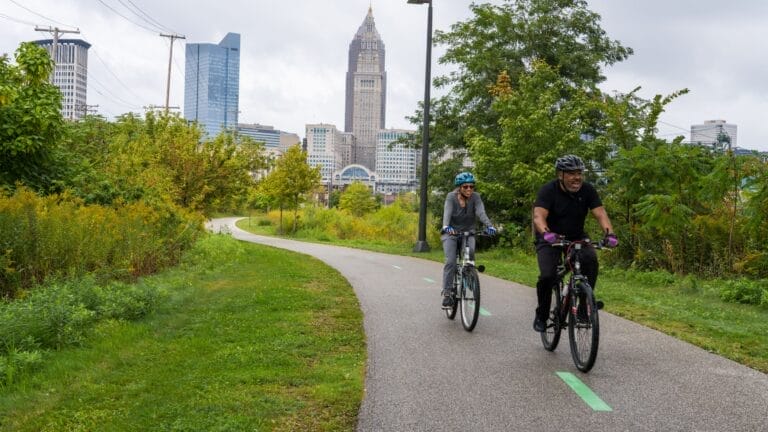
We help communities envision, plan, and create climate-smart green spaces that include green infrastructure to reduce flooding, shade trees to cool temperatures, vibrant natural areas to sequester carbon, and connected trails that encourage eco-friendly transportation, like biking and walking.
Read About a Few of Our Notable Projects
-
Securing Funding for Climate-Smart Parks and Conservation
With the help of our supporters, we’ve created and passed hundreds of ballot measures that protect natural spaces and create parks critical to building climate resilient communities. We advocate at the federal, state and local level for policies to advance nature-based climate solutions.


Read inspiring stories of our work across the country. See all stories.