On Land, Language, and Leadership
Conservationists are increasingly recognizing the critical role that Native voices, Tribal governance, and Indigenous knowledge have always played—and must continue to play—in land management and stewardship.
By Trust for Public Land
Published October 29, 2025



From the stillness of pin-drop silence, the steady crescendo of a Mohawk drumbeat fills the room with a driving rhythm. A woman begins to sing, her voice accompanied by austere white text on a black screen introducing the Ohèn:ton Karihwatéhkwen, a statement of thanks used by members of the Haudenosaunee Confederacy to open and close each day. For 10 minutes, 20 members of the Six Nations—children, adults, and elders—appear on screen and speak the lines in their Mohawk language. Each line honors a different, sacred element of nature, from roots and insects to the moon, the winds, the four sacred beings, and the Creator. Punctuating each line is a single word: “Tho.” In English: “All are agreed.”
Also known as the Opening Address, it’s a message of peace and gratitude for Mother Earth and those who inhabit her—a reminder to walk gently and live in harmony. It’s also the name of the short documentary film that screened at this year’s Mountainfilm festival in Telluride, Colorado. The annual gathering brings activists together to inspire audiences on topics at the intersection of outdoor recreation and conservation.
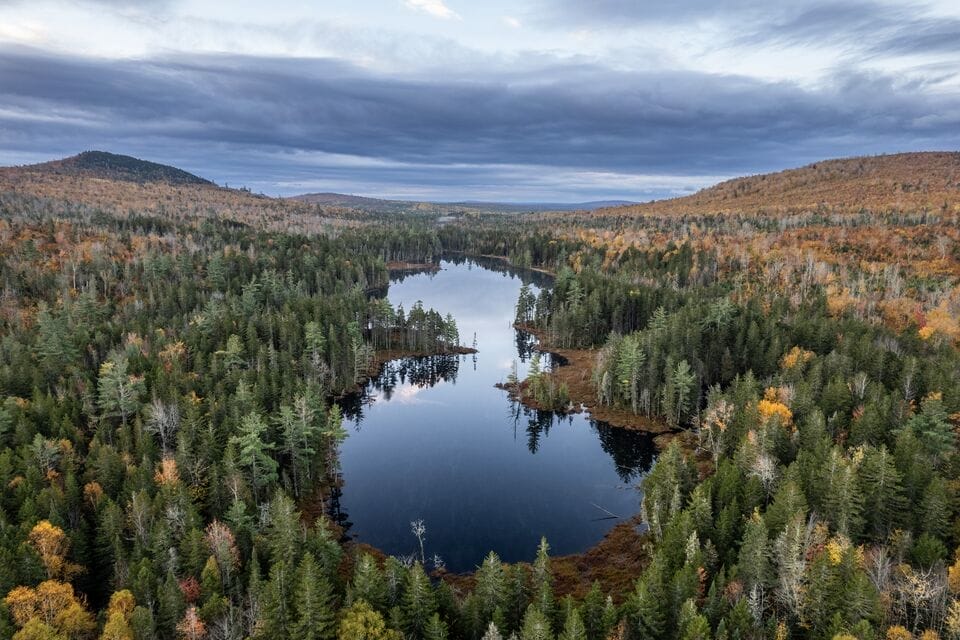
Trust for Public Land was also selected to premiere a short film called Good Relatives, which highlights our partnership with the Penobscot Nation in Maine. We’re currently working to restore nearly 30,000 acres to the Tribe to ensure preservation of this special landscape and provide public access to Katahdin Woods and Waters National Monument. It’s a model for partnership between Tribal nations, nonprofits, and the National Park Service.
Our senior director of Tribal and Indigenous Lands, Dr. Ken Lucero, was invited to Mountainfilm to speak about our efforts and the larger movement to re-Indigenize conservation. He was joined by former U.S. Secretary of the Interior and current New Mexico gubernatorial candidate Deb Haaland; Konwanahktotha Alvera Sargent of the Friends of the Akwesasne Freedom School, who also codirected The Opening Address; and moderator Jade Begay, an Indigenous rights and climate policy expert. Together, they stirred the sold-out crowd to think and act more deeply about how Tribes and conservation organizations can lead our country’s approach to land conservation.
Here, excerpts from the panel, edited for clarity, illuminate how we got where we are and how we can move forward by honoring Tribal sovereignty and preserving Indigenous language, culture, and practices—which are inextricably tied to land. Incidentally, these are also top priorities for TPL’s Tribal and Indigenous Lands work.
JADE BEGAY: Deb, I want to begin with you. I know I’m not the only one at the edge of my seat waiting to hear your thoughts on these topics. Can you share with us some reflections on your time serving as Secretary of the Interior—and the opportunities, but also the challenges, you faced in weaving our Native values into that department?
DEB HAALAND: When I got there, I learned that the Bureau of Indian Affairs often wasn’t on equal footing with all the others in the department. It wasn’t a priority. So I focused on putting our [nation’s] treaty obligations to our 574 federally recognized Tribes on equal footing within the department. We were able to help the Bureau of Indian Affairs have a seat at the table. That’s what brought us 400 co-stewardship agreements with Tribes and a return of the Bison Range to the Confederated Salish and Kootenai Tribes and the return of the Dworshak National Fish Hatchery to Tribal management for the Nez Perce Tribe. I feel like when Tribes are doing well, our country’s doing well.

Members of the Nez Perce Tribe ride horses through Precious Lands Wildlife Area in Oregon. In 1997, TPL raised money to purchase the 10,300-acre property and return it to the Tribe, which has been successfully stewarding the land while maintaining areas for public recreational use. Photo: Phil Schermeister
BEGAY: I was honored to attend the event last year where President Biden gave an official apology for boarding schools [and the U.S. government’s role in assimilating Indigenous children]. One of the things you, Secretary Haaland, said at that event that stuck with me was, “They tried and they tried. They tried to assimilate us. They tried to annihilate our cultures. They failed.”
Alvera, if the United States built the boarding schools to annihilate us as a people and our cultures, what you’re doing now is the remedy. You built the Akwesasne Freedom School, which, for the last 41 years, has been immersing Native students in the Mohawk language and teaching them about [their] culture. Can you tell us why it is so critical for young people to be connected to language and culture in order to become good stewards of the land? How do you see your students’ connection to land strengthened by your teachings?
KONWANAHKTOTHA ALVERA SARGENT: School is the answer. It’s the key to our healing, all of us learning our languages, learning our cultures, and living it. We have to learn to walk our talk. So that’s what we do at the freedom school. And there’s a lot of other Native nations today that have immersion schools. That’s growing, that whole movement of language and cultural revitalization, it goes together.
And we teach them to plant. We have community gardens. So they’re working in the garden and learning all these words that have to do with nature. Our students know where their food comes from and how to protect our seeds. It’s important that it continues.
BEGAY: Alvera spoke about protecting culture and language, which is so connected to how we protect our nations. Ken, you work with the Trust for Public Land, which has supported Native peoples in reconnecting with their ancestral lands. Can you talk about Tribal sovereignty in this current moment and how we can all better work to be allies?
KEN LUCERO: I think one of the most important things to understand is that Tribes are sovereign nations within the sovereign nation of the United States. We have always had our own governance structures, and that goes back to long before first contact with other countries. Part of that structure was the ability to manage and take care of the land.
We’re trying to make good on the return of lands to their rightful owners because it’s to all our benefit that this happens. Tribal people know how to steward the land in a way that will help with the climate, that will help with food sustainability—both in our lifetimes and in future generations. Together, all of us can work toward a better future for the whole country. That’s what’s at stake now.


Trust for Public Land has returned more than 200,000 acres to the ownership of Tribes. Right now, we’re working on at least 20 of these projects. One of our most notable is Wáhsehtəkʷ in Maine with the Penobscot Nation, which will be one of the largest land returns between a Tribe and a U.S.-based nonprofit. These agreements deliver on what we mean by honoring Indigenous conservation ethics. They put the land and its management into the hands of those who know it best, who have stewarded it for centuries—that’s a growing commitment that we’re leading.
And as Alvera said, school—education—is so important. How we educate our youngest citizens is part of that self-governance and sovereignty. And that education doesn’t only happen inside the classroom. The whole school property is a place for learning, including the schoolyard. We got a great gift when Secretary Haaland was at the Department of the Interior: We entered into a memorandum of understanding with the Bureau of Indian Education to do nine Tribal schoolyards. And we make sure that—much like at Alvera’s freedom school—the Tribe, the culture, the tradition, and the language are central to each schoolyard’s development.
Funding for these projects is in jeopardy. Support our work today.
Remember, as Deb said, they tried to annihilate us through assimilation. Thankfully, it hasn’t worked, but assimilation has had an impact on each successive generation.
SARGENT: I grew up a Catholic. I didn’t know anything about our longhouse ceremonies and all that. But since being involved with the freedom school, I’ve learned along the way with our students. We have to protect everything we have. We have to protect our identities as Indigenous people.
HAALAND: All of us need to use our voices—every single person in this room and beyond. We need to use our voices.
LUCERO: Right. When we engage these communities and ask what they want their children to learn about, what’s important to them, every time they say, “We want them to know our language. We want them to know the culture. We want them to know just who their ancestors are and the responsibilities that they’ll have as they move forward in their lifetimes so they can pass that on to their children.”

In Kaua‘i, TPL protected Alakoko Fishpond, a 600-year-old site that provides sustainable, traditional foods and serves as a place for youth to learn about Native Hawaiian aquaculture and history. Photo: Tina Aiu
That includes lessons about how to care for the land—and perpetuating the benefits that come with it. A fact we often point to is that lands stewarded by Indigenous peoples, compared to governments or corporations, have much lower rates of deforestation and habitat loss.
An example from TPL’s work is the Kashia Coastal Reserve in California, where the Tribe has been working to improve habitat for fish and abalone, where responsible forest management has led to healthier waterways, and where Indigenous methods of timber harvesting are creating more functional, biodiverse forests. There’s a similar story with the Yurok Tribe, also in California, where we helped return 2,500 acres of the Ke’pel Creek watershed that are being traditionally managed. Or the Patawomeck Indian Tribe, who now owns their land along the Rappahannock River in Virginia—and many others in our portfolio. It’s a hopeful model, and the results are heartening. I’m sure you all have similar examples.
HAALAND: With respect to forests and how Indigenous people manage their forests, I went to [visit] the Menominee Tribe [of Wisconsin], and they were very proud to show me a satellite image of the forest that they manage as opposed to the [surrounding] forest. It was like this beautiful emerald-green gem right in the middle of a not-emerald-green gem. It’s pretty clear that the stewardship practices that Indigenous people have handed down for millennia actually work. During the time I was at the Department [of the Interior], we were very grateful that Tribes were generous with their knowledge and willing to help us move those practices forward. I wholeheartedly support the Indigenous stewardship of our forest lands. I think it’s valuable and important.
Learn more about our Tribal and Indigenous Land work.

Donate to become a member, and you’ll receive a subscription to Land&People magazine, our biannual publication featuring exclusive, inspiring stories about our work connecting everyone to the outdoors.
