

A Ghost Town That Gets It Right
In the mountains of Montana, Garnet Ghost Town offers a window into the past.
By Trust for Public Land
Updated September 23, 2025



If you’ve spent some time road-tripping, you know that “ghost town” can mean a lot of things: from the rubble of a few foundations—the faintest trace of a building or two—to full-on theme parks complete with entertainment and restaurants. Too little preservation, and it’s hard to imagine how the place used to be. Too much, and a visit feels more like Hollywood than history.
That’s why we love Garnet, Montana—a ghost town that gets it just right.

The ghost town of Garnet has been restored just the right amount; there’s lots to see, but plenty left to the imagination. Photo: Samantha Storms/Bureau of Land Management
Perched at 6,000 feet in the folds of the the mountain range that shares its name, Garnet was a mining town built not on gemstones but gold. Founded in the 1890s, it survived a series of boom-and-bust cycles, a massive fire, and the First World War, when many of its residents were called away to the army.

Garnet offers interpretive information and a self-guided tour, but the town is yours to explore at your own pace. Photo: Bob Wick/Bureau of Land Management
But the Second World War came with restrictions on the use of dynamite, making profitable mining in the rugged terrain all but impossible. The town was at last abandoned—with one exception: Widowed saloon owner Marion Dahl stayed on another few decades, reportedly taking potshots at vandals and looters from her porch.
She couldn’t deter them all. Over the years, scavengers stripped the town of artifacts and fixtures, from stained glass windows to the ornate woodwork of the once-grand hotel. But local preservationists and the Bureau of Land Management were keen to save what was left. Trust for Public Land helped wrangle a deal, and the rest is history—history you can experience for yourself.
Support our work preserving places like these by making a donation today.

The fascinating thing about visiting a ghost town is imagining the people who once lived there. Photo: Samantha Storms/Bureau of Land Management
To do so, you’ll need to take a well-maintained forest road 11 miles up from Route 200, about a half hour east of Missoula. (Steer clear of the alternate route from I-90, unless you’ve got a good off-road vehicle and some rally-car skills.) From the top, it’s a short walk to the remains of Garnet, buildings strewn about the small valley with the haphazard quality common in towns thrown up in a rush at the first cry of “gold!”
Though its scattered look is typical, in other ways Garnet was very different from the average mining town. You’ll see the evidence as you tour the buildings: Multiroom homes with large kitchens are a legacy of Garnet’s unusual history as a place for families, not just bachelors. The Garnet Preservation Association works to stabilize buildings, collect artifacts, and provide interpretation at the ghost town site. There’s even a cabin that was provided free to newlyweds until they could build their own home (or until the town held another wedding, whichever happened first).
A plaque marks the site of the old union hall. Another Garnet anomaly, labor relations here were good—the mining company endorsed the union and even donated the property for the hall, which hosted Saturday-night socials on a dance floor made of springy maplewood. The presence of a strong organization in the community helped keep the peace, and Garnet saw more family picnics and quilting bees than gunslinging or brawls.
The trails surrounding Garnet include a loop through the remnants of the diggings. You can make out the waste-rock dump piles, now overgrown, and peer into the murky water that has seeped into the old mine shafts.
More extensive options—including 30 miles of backcountry roads and mountain biking trails—are perfect for the long days of summer. Just pick up a map from the BLM office in Missoula before you head out to explore.
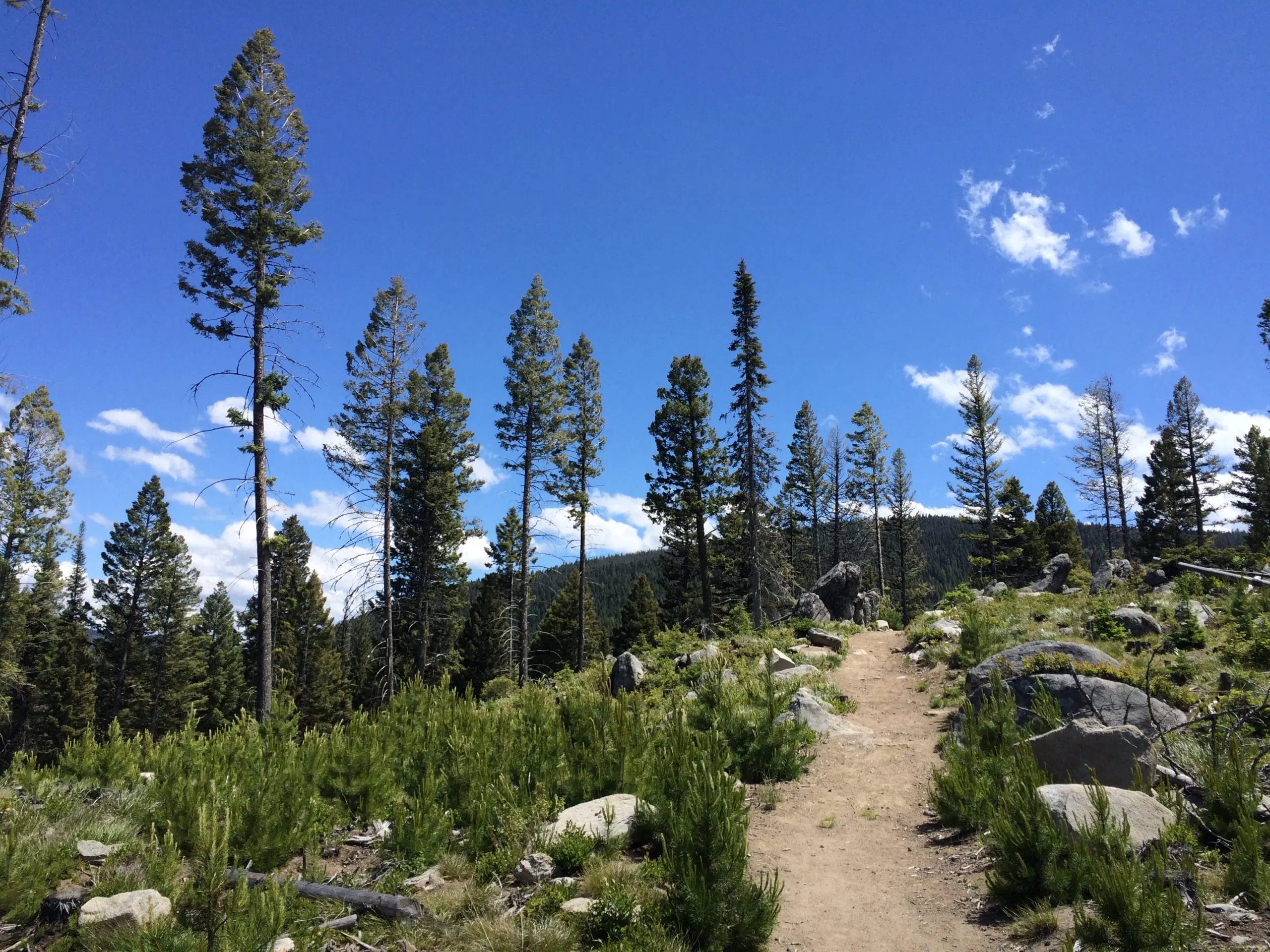
The ghost town and surrounding trails are available for all to explore—thanks to conservationists like you. Photo: Trust for Public Land
In winter, the road to the ghost town is closed to wheeled vehicles but popular with cross-country skiers and snowmobilers. The especially adventurous can even rent one of Garnet’s restored cabins; reservations are granted based on a lottery system.
Even if you don’t believe in ghosts, you’ll want to watch out for the mice—one of many reasons we prefer our ghost towns in daylight!
Visit the Garnet Preservation Association for more info and to plan your visit.


Donate to become a member, and you’ll receive a subscription to Land&People magazine, our biannual publication featuring exclusive, inspiring stories about our work connecting everyone to the outdoors.
