
Trust for Public Land
Strategic Plan
2025-2030: Connecting Everyone
to the Outdoors
Since 1972, Trust for Public Land has been steadfast in our commitment to create parks and protect public land, yet we’ve remained nimble enough to meet the current moment.
In the past half century, we’ve created 5,504 parks, community schoolyards, and trails; protected 4 million acres; and helped secure $110 billion in public funding for green spaces. That’s incredible progress toward our goal of connecting everyone to the joys and benefits of the outdoors. And we know there’s more work to do.
At a time when people are increasingly isolated and divided, connecting to nature can inspire hope, harmony, and unity. This understanding sets us apart from other conservation groups focused solely on preserving wilderness for its ecological value. We’re more than a conservation organization—we’re catalyzing social impact, using nature and the outdoors as powerful forces for connection, equity, and community well-being.
We excel at bringing together people and organizations with vastly different perspectives, finding common ground, and moving forward together to achieve common goals. Through these strong, long-term relationships, we navigate complex challenges and turn communities’ shared visions for green space into lasting reality.
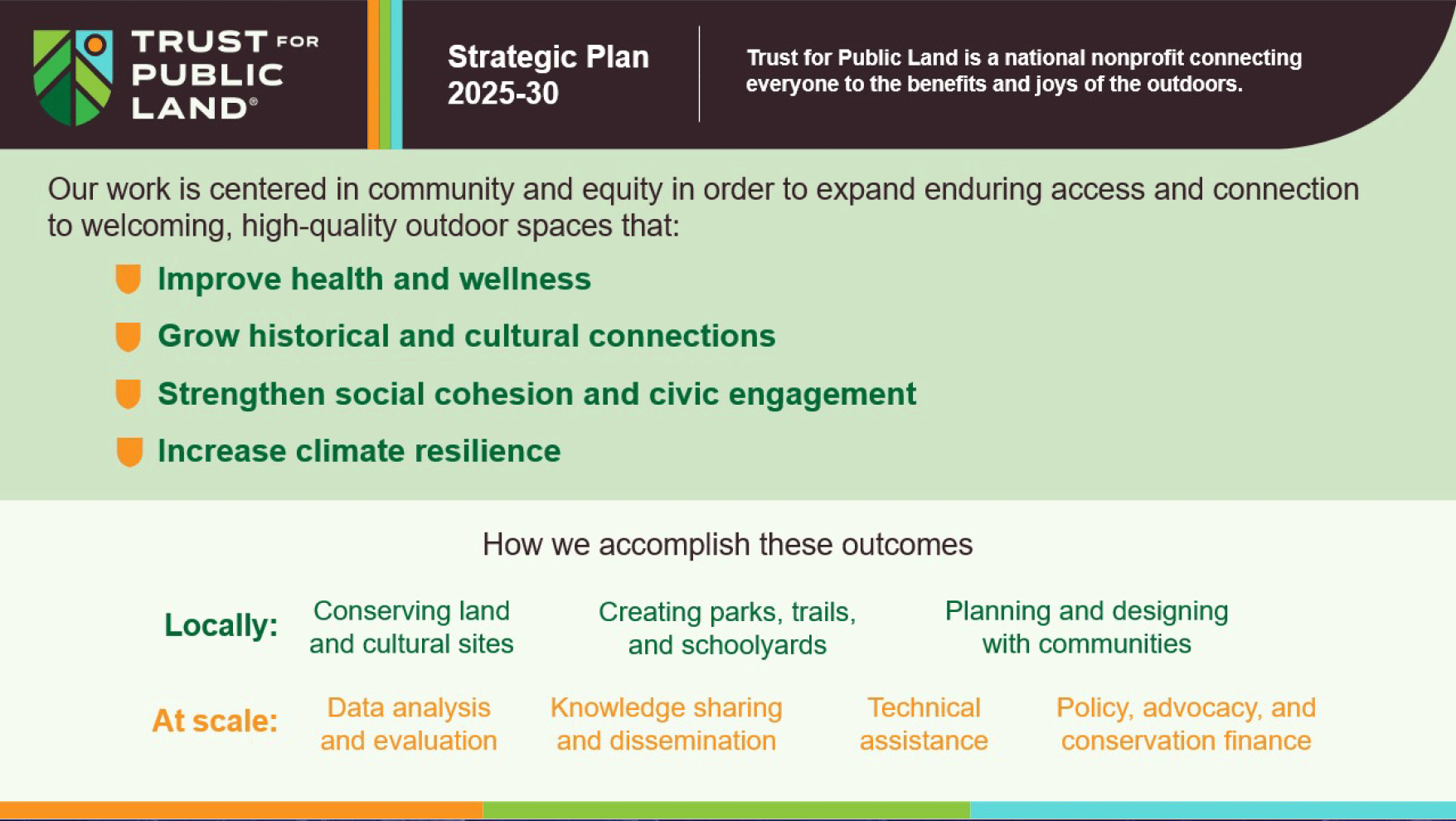
Building on our record of success, our new five-year strategic plan puts an even sharper focus on community-centered outcomes in the following five areas.
-
Enduring access and connection to welcoming, high-quality outdoor spaces.
-
Improving health and wellness: Time spent in nature makes us happier and healthier. Making outdoor spaces accessible is a powerful public health strategy that improves people’s physical, mental, and social well-being.
-
Growing historical and cultural connections: Land has meaning. By ensuring that public lands, parks, trails, and schoolyards are inclusive and reflective of all people, we champion a future defined by connection—to the land and to each other—and a feeling of deep, communal belonging.
-
Strengthening social cohesion and civic engagement: Shared public outdoor spaces create trust and connection between neighbors and unlock communities’ power to address pressing social challenges, advocate for resources, disrupt disenfranchisement, and have their voices heard.
-
Increase climate resilience: Nature-based climate solutions increase communities’ capacity to adapt to and recover from flooding, severe heat, and wildfires. Green spaces absorb floodwater, while plants, trees, and soil reduce high temperatures and capture greenhouse gases.
The evolution from our origins in 1972 to our comprehensive strategic plan in 2020 to the sharpened focus on scaling community-centered outcomes and we move forward reflects a deepening commitment to health, equity, and climate, and gives us a clearer understanding of the need to make systemic change.