
A Blueprint for Belonging
Through stories from cities nationwide, see how community-led programming in parks offers a model for strengthening social ties and building more connected, resilient neighborhoods.
At a time when division and disconnection dominate the headlines, TPL’s “On Common Ground” program tells a different story—one of belonging, empathy, and community. This work is rooted in the belief that our nation’s parks and public spaces can do more than provide recreation; they can bring us together across our differences. In the case studies we share, you’ll read about the profoundly impactful work that Trust for Public Land has supported in a diverse range of communities across the country—and the power of what happens when communities come together in shared, outdoor spaces.
These efforts took place in neighborhoods where people might live side by side but not know each other—where new immigrants and longtime residents share a zip code, but not always a sense of community; where housed and unhoused neighbors navigate the same parks, but not the same realities; where teens, seniors, refugees, and folks with disabilities all seek connection in their own ways. The parks departments, nonprofits, and grassroots leaders in these stories didn’t shy away from challenges of disconnection.
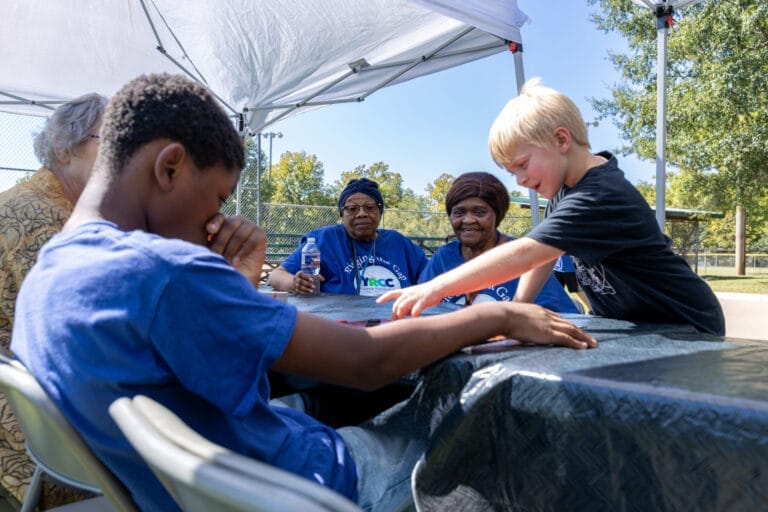
Instead, they leaned in. They created programs that fostered joy, dialogue, and relationship-building across diverse groups, including those formed around race, income, ability, age, and housing status. From line dancing and chess in an Arkansas park to baking bread and breaking barriers in North Carolina, these projects weren’t about short, one-time interactions—they centered around the role of parks to host meaningful human connection over repeated encounters. Whether sparked by food, music, soccer, or shared goals, each story highlights the power of thoughtful, inclusive programming to transform parks into platforms for connection.
These stories help draft a blueprint for America’s park practitioners and community leaders for what it looks like to build community—not by smoothing over differences, but by embracing the strength of our parks and public spaces to host multiple identities, perspectives, and experiences. They remind us that when we meet on common ground, we’re not just improving our parks—we’re weaving together a stronger social fabric that can turn
a neighborhood into a community.
I’m immensely grateful to everyone who made these projects possible—from the park administrators and staff to so many neighbors who came together as strangers… and left as new friends.
With gratitude,
Cary Simmons
Director of Community Strategies
Trust for Public Land



Parks and Public Spaces Build Common Ground
Parks are more than green spaces. They’re powerful civic and social infrastructure. Explore tools, trainings, and stories for city leaders, park practitioners, and community advocates.
